
Driving often represents freedom, independence, and connection to others. When Alzheimer’s disease or another dementia affects driving, families may struggle with knowing when to step in and how to begin the conversation.
You do not have to navigate this decision alone. Recognizing changes, involving qualified professionals, and planning other ways to get around can help protect safety while preserving dignity.
How Does Dementia Affect Driving?
Safe driving requires attention, judgment, quick reactions, and the ability to make decisions as conditions change. Dementia can affect these abilities, even when someone still remembers how to operate a car.
Some people in the earliest stages may continue to drive safely for a time. As the disease progresses, however, they will eventually need to stop. A familiar route or a long history of safe driving does not guarantee that driving is still safe today.
Warning Signs to Take Seriously
Watch for changes such as:
- Getting lost in familiar places or forgetting where they are going.
- Missing traffic signs or signals.
- Making slow or unsafe decisions at intersections.
- Drifting between lanes or hitting curbs.
- Misjudging the speed or distance of other vehicles.
- Confusing the gas and brake pedals.
- Becoming unusually confused, frustrated, or overwhelmed while driving.
- Returning much later than expected from a routine trip.
- New dents, scratches, collisions, or near misses.
- Passengers expressing concern or feeling unsafe.
You do not need to wait for a crash to take action. If someone is confusing pedals, running red lights, or making other dangerous errors, arrange another driver and seek professional guidance before they drive again.
Starting the Conversation
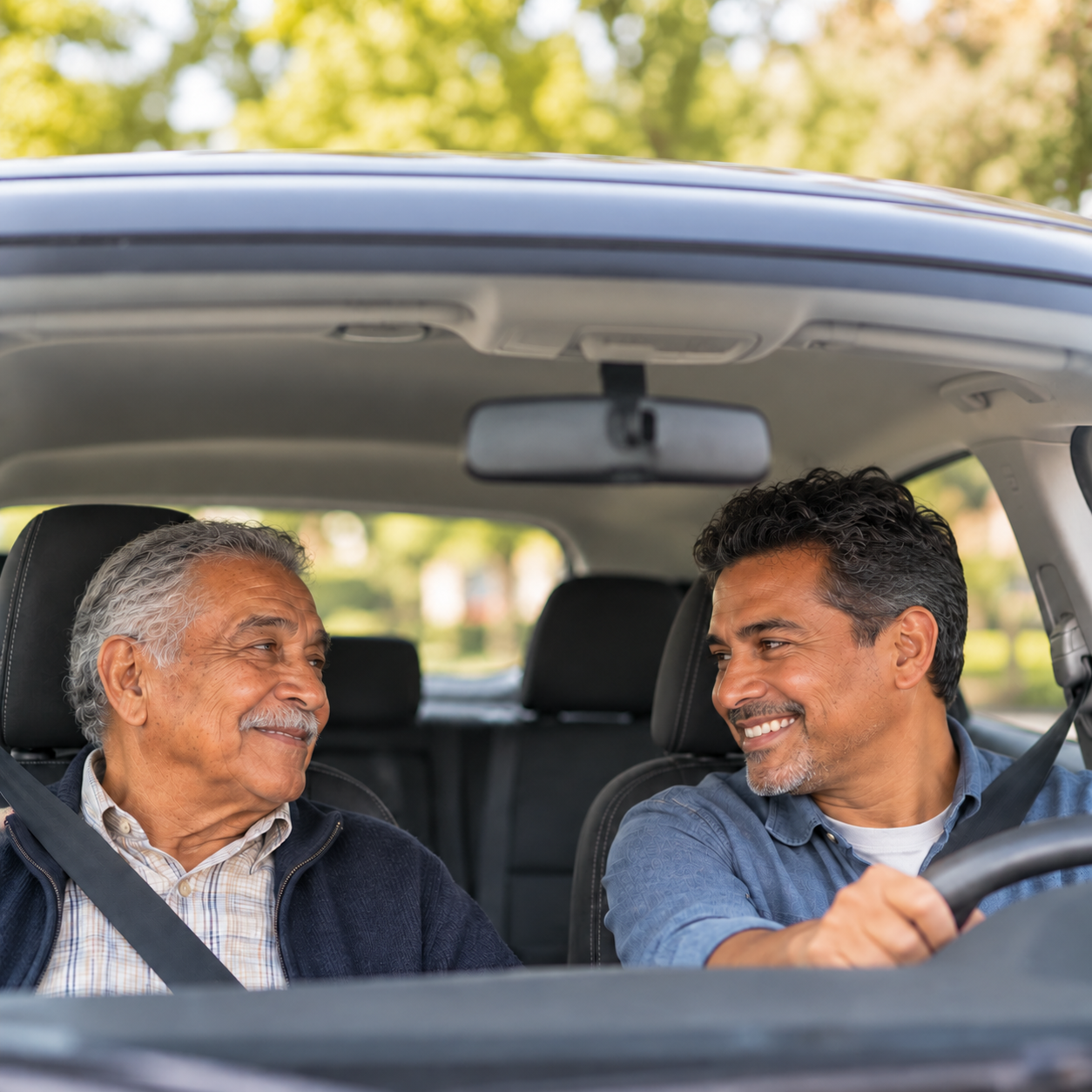
Begin discussing driving early, while your loved one can participate in planning. Choose a calm time and a person they trust to lead the conversation.
Use specific examples.
Describe what you have noticed without blame: “You seemed unsure which lane to use at the intersection yesterday, and I’m concerned about your safety.”
Acknowledge the loss.
Giving up driving can bring sadness, anger, or fear of becoming dependent. Listen to those concerns and recognize how much driving means to them.
Focus on staying connected.
Talk about how they will continue visiting friends, attending church, shopping, and doing activities they enjoy.
Involve their care team.
Their physician can review health concerns and medications, discuss driving safety, and help determine whether a specialized driving evaluation is appropriate.
Expect several conversations.
Dementia can affect a person’s ability to recognize changes in their own abilities or remember previous discussions. Stay calm, use simple explanations, and keep the message consistent.
Words You Can Use
“I know driving is important to you. I’m concerned about the changes we’ve noticed, especially [specific example]. Let’s talk with your doctor about whether a driving evaluation would help. We can also make a plan so you can keep going to the places that matter to you.”
If a professional has determined that driving is no longer safe:
“I know this is hard. The evaluation showed that driving is no longer safe. I’ll help you get where you need to go. Let’s plan your rides for this week.”
Getting a Professional Driving Evaluation
A driving rehabilitation specialist can assess how changes in vision, physical abilities, attention, memory, and judgment affect driving. A comprehensive evaluation may include both clinical testing and an on-road assessment.
An evaluation offers guidance about current driving ability. Because dementia progresses, someone who is cleared to drive may still need follow-up evaluations.
Birmingham Driving Resource
UAB Spain Rehabilitation’s Community Mobility and Driving Program provides clinical and on-road driving evaluations and helps with mobility planning.
Ask the program about evaluations for people with dementia, referral requirements, costs, and follow-up recommendations.
Helpful Resources for Families
At the Crossroads: Family Conversations About Alzheimer’s Disease, Dementia & Driving
A free guide from The Hartford and MIT AgeLab with practical information about recognizing changes, having conversations, and planning ahead.
Read the Family Guide (PDF)
Alzheimer’s Association: Driving and Dementia
Warning signs, conversation tips, planning tools, and videos showing how different families approach driving decisions.
Explore the Resources and Videos
Alzheimer’s Foundation of America: Driving and Dementia
A brief overview of driving concerns and ways to approach the conversation.
Read the Overview
National Highway Traffic Safety Administration: Older Drivers
Guidance for gathering observations, talking about concerns, and getting professional help.
Read the Family Guidance
Support for Your Family
Alzheimer’s of Central Alabama supports families navigating the everyday challenges of Alzheimer’s disease and related dementias. Contact our office for caregiver support and help identifying resources.
This information supports family planning and conversations. Individual driving decisions should involve the person’s health care team and, when appropriate, a qualified driving rehabilitation specialist.








You must be logged in to post a comment.